Water Heater Leak Cleanup in Wake Forest, NC
Wake Forest Water Damage Restoration provides water cleanup, extraction, moisture assessment, and structural drying after leaking water heaters in Wake Forest, North Carolina. Tank leaks, connection leaks, supply-line leaks, and drain valve leaks can release a large volume of water that spreads beyond the utility room before it is noticed.
Signs of Water Heater Water Damage Near Wake Forest
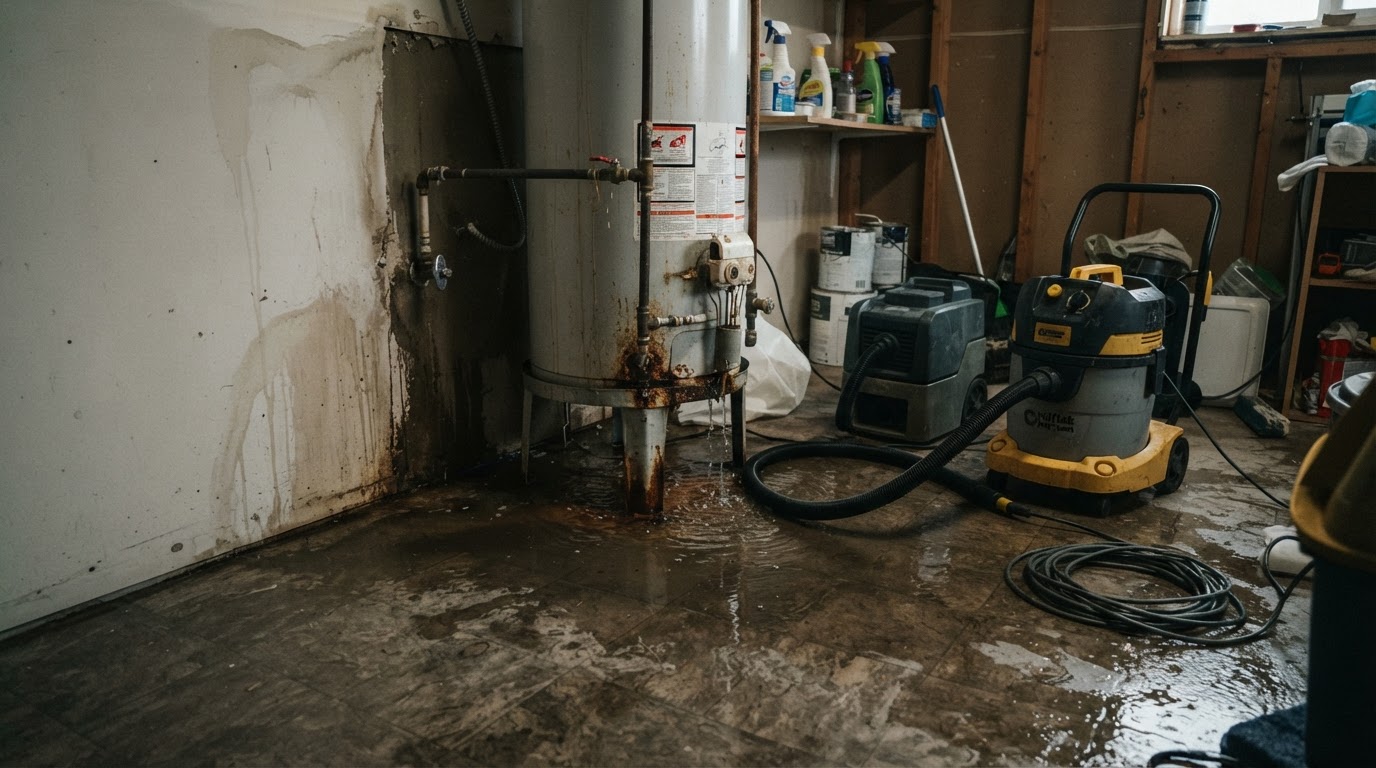
Signs of water heater water damage include puddling around the tank, wet flooring, damp drywall, discolored baseboards, moisture spreading to adjoining rooms, water beneath flooring, water appearing below an upper-floor utility area, and persistent dampness. A slow leak can travel well beyond the utility room before it becomes obvious.
A water heater can leak from several points. Tank failure can release a sudden, large volume of water, while connection leaks, supply-line leaks, and drain valve leaks often start slowly and continue over time. Corrosion-related leaking can develop gradually, and the source is not always obvious without inspection by a qualified professional.
Because water heaters often sit in utility rooms, closets, or garages, the water has time to spread before it is discovered. Moisture can travel beneath flooring, behind baseboards, into wall cavities, and into adjacent rooms. When the water heater is on an upper floor, water can also travel through the ceiling below.
Water heater repair or replacement should be performed by an appropriate qualified trade professional when required. The restoration service focuses on the resulting water damage — extracting the water, evaluating how far moisture has migrated, and drying affected materials.
Our Water Heater Leak Cleanup Process in Wake Forest
The water heater leak cleanup process includes stopping or isolating the source when safely handled by appropriate parties, extracting standing water, assessing moisture migration, evaluating flooring and nearby materials, structural drying, dehumidification, cleaning where needed, and restoration planning. Water can move well beyond the visible puddle.
- 1
Stop or Isolate the Source
Where it can be done safely, the water source is isolated. The actual repair or replacement of the water heater is handled by a qualified trade professional.
- 2
Extract Standing Water
Standing water in the utility room and any adjacent areas is removed using appropriate extraction equipment.
- 3
Assess Moisture Migration
Moisture detection evaluates how far water has traveled beneath flooring, behind baseboards, into drywall, and into adjacent rooms.
- 4
Evaluate Flooring & Nearby Materials
Flooring, subfloors, drywall, and nearby cabinetry are evaluated for moisture content to determine what can be dried and what may need attention.
- 5
Structural Drying & Dehumidification
Air movement and dehumidification promote controlled drying of materials that absorbed water, with monitoring over time.
- 6
Cleaning & Restoration Planning
Cleaning is performed where needed, and materials or areas requiring additional repair or restoration are identified for the next phase.
Water from a water heater can move under flooring, behind baseboards, into wall cavities, into adjacent rooms, and through ceilings if the heater is located upstairs. The cleanup process accounts for all of those pathways, not just the visible puddle.
Can a Leaking Water Heater Cause Hidden Water Damage?
Yes. Water from a leaking water heater can travel beneath flooring, behind baseboards, into drywall, or through nearby wall cavities before the full extent of the damage becomes visible. Removing standing water is only one part of cleanup; moisture assessment and structural drying may also be needed.
Moisture from a water heater leak commonly collects in drywall, flooring, subfloor, cabinetry, closets, walls, insulation, and ceilings below when the heater is upstairs. Because water follows the path of least resistance, it can travel along baseboards and beneath flooring into rooms that appear untouched at first glance.
Rapid extraction followed by drying matters because the longer moisture sits in porous materials, the more it spreads and the harder it becomes to manage. Persistent moisture can create conditions that support microbial growth and secondary property damage, which is why moisture detection is used to locate hidden water before drying is considered complete.
Water Heater Leaking?
Fast extraction and drying help limit how far moisture migrates from the utility room.
Water Heater Water Cleanup for Wake Forest Homes & Properties
Water heater leak cleanup is available for residential properties, rentals, utility closets, and commercial settings where a water heater has leaked. The cleanup approach is tailored to where the heater is located and how far the water has traveled.
In single-family homes and townhomes, water heater leaks often begin in a garage, utility closet, or basement and spread into adjoining living areas. Rental properties may require coordination with tenants or property managers. Commercial settings can involve larger water heaters or multiple units that release more water when they fail.
Supply-line failures and connection leaks are common contributors to water heater water damage. Where a supply-line break is involved, the same extraction and drying principles apply. Along with Wake Forest, service information is available for nearby communities including Raleigh, Rolesville, Youngsville, and Knightdale.
Related Water Damage Services
Water Heater Leak Cleanup FAQs in Wake Forest
Water Heater Leak in Wake Forest?
Call Wake Forest Water Damage Restoration at 984-401-9704 for water heater leak cleanup in Wake Forest, NC. Water extraction and structural drying help manage moisture that has spread beyond the utility room.
Wake Forest, NC 27587 • Serving Wake Forest & surrounding North Carolina communities