Flood Damage Cleanup in Wake Forest, NC
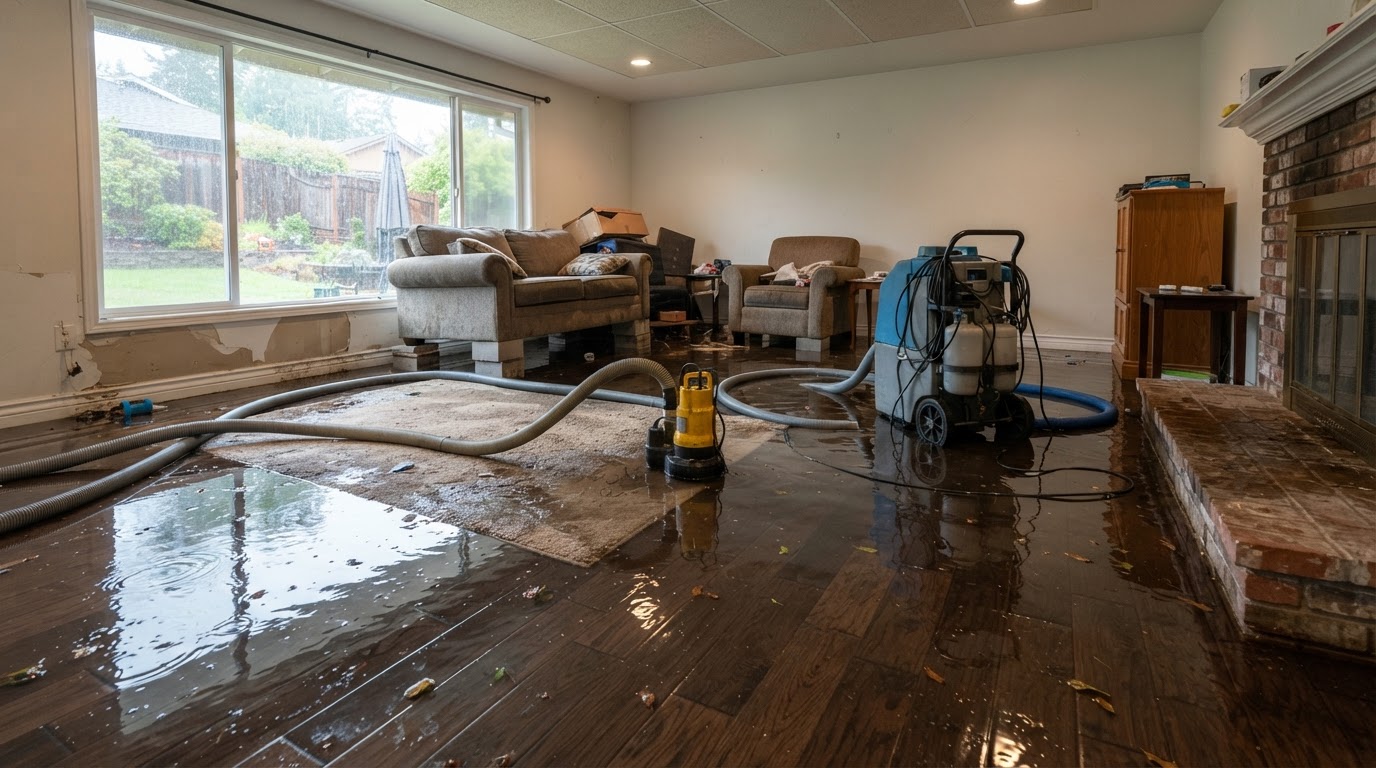
Wake Forest Water Damage Restoration provides flood damage cleanup for homes and businesses in Wake Forest, North Carolina. Indoor flooding from heavy rainfall, plumbing failures, appliance failures, and building-envelope intrusion is removed, evaluated, and dried to help limit secondary damage.
What Causes Indoor Flood Damage in Wake Forest?
Indoor flood damage in Wake Forest is commonly caused by heavy rainfall, plumbing failures, overflowing fixtures, appliance failures, burst pipes, drain-related incidents, and roof or building-envelope water intrusion. Not all indoor flooding has the same contamination level, so the cleanup approach depends on the water source.
Heavy rain can push water into a home through roof leaks, around windows and doors, or at ground level when drainage cannot keep up. Plumbing failures and burst pipes release clean water indoors, while overflowing fixtures and appliance failures can spread water quickly across floors. Drain-related incidents and sewer backups introduce a different category of water that requires more careful handling.
It is a mistake to treat all flood water the same. Water from a clean supply-line break is handled differently from water that has picked up contaminants or contains sewage. The contamination level affects whether materials can be dried in place or need to be removed, and it shapes the cleaning approach after the water is gone.
Common Sources of Indoor Flooding
- Heavy rainfall and storm-driven water intrusion
- Plumbing failures and burst pipes
- Overflowing fixtures and appliance failures
- Drain-related incidents and backups
- Roof or building-envelope leaks
Our Flood Damage Cleanup Process Near Wake Forest
The flood cleanup process moves from a safety assessment to water removal, moisture assessment, removal of affected debris or materials where necessary, structural drying, cleaning appropriate to the water source, and restoration planning. Each step depends on the source and extent of the flooding.
- 1
Safety Assessment
The affected area is assessed for safety concerns, including electrical hazards and contaminated water, before any work begins.
- 2
Water Removal
Standing flood water is extracted using equipment matched to the volume of water and the affected materials.
- 3
Moisture Assessment
Moisture detection is used to locate water that has migrated into subfloors, wall cavities, drywall, and other building materials.
- 4
Removal of Affected Materials
Where necessary, unsalvageable debris or porous materials are removed, especially when the water source involves contamination.
- 5
Structural Drying
Air movement and dehumidification are used to promote controlled drying of materials that absorbed water.
- 6
Cleaning & Restoration Planning
Cleaning appropriate to the water source is performed, and a restoration plan identifies materials or areas requiring additional repair.
Why Professional Flood Drying Matters After the Water Is Gone
A room that looks dry is not necessarily dry. Porous materials like subfloors, wall cavities, drywall, insulation, and flooring can hold moisture long after the visible water is removed. Professional drying manages that hidden moisture and the elevated humidity it creates.
Flood water soaks into materials that pull moisture inward. Subflooring beneath hardwood or tile, drywall that has wicked water up from the floor, insulation inside wall cavities, and the padding beneath carpet can all remain wet even when the surface appears dry. As that moisture evaporates, it raises indoor humidity, which can slow drying and contribute to secondary damage.
Professional flood drying uses air movers to promote evaporation and dehumidifiers to pull moisture out of the air, creating a controlled drying environment. The goal is to return affected materials to an appropriate dry condition rather than relying on appearance alone. Persistent moisture can create conditions that support microbial growth, which is why drying is monitored rather than guessed at.
Get Flood Cleanup Help
Indoor flooding should be addressed quickly to limit how far water migrates into your property.
Flood Cleanup for Wake Forest Homes & Commercial Properties
Flood damage cleanup serves homes, rental properties, businesses, offices, and commercial properties in Wake Forest. Whether the loss is a single flooded room or a larger commercial space, the process of removing water, evaluating moisture, and drying the structure follows the same principles.
Residential flood cleanup addresses homes, townhomes, apartments, and rental properties where indoor flooding has affected flooring, walls, and belongings. Commercial flood cleanup applies to offices, retail spaces, and business properties where rapid water removal helps limit downtime and protect the building.
Along with Wake Forest, service information is available for nearby communities including Raleigh, Rolesville, Youngsville, and Knightdale. The footer lists the full service-area coverage across the Triangle region.
Related Water Damage Services
Flood Damage Cleanup FAQs for Wake Forest
Need Flood Cleanup in Wake Forest?
Call Wake Forest Water Damage Restoration at 984-401-9704 for flood damage cleanup in Wake Forest, NC. Emergency response is available for indoor flooding in homes and businesses.
Wake Forest, NC 27587 • Serving Wake Forest & surrounding North Carolina communities