Structural Drying & Dehumidification in Wake Forest, NC
Wake Forest Water Damage Restoration provides structural drying and dehumidification for homes and businesses in Wake Forest, North Carolina. Standing water removal is often followed by controlled drying of moisture retained within building materials, because removing the visible water is only part of the job.
What Materials May Need Structural Drying in Wake Forest?
Materials that may need structural drying include drywall, wood framing, subflooring, flooring, carpet, carpet pad, cabinetry, baseboards, ceiling materials, insulation depending on type and condition, and wall cavities. Water that absorbs into these materials is not removed by extraction alone.
When water enters a property, porous materials pull moisture inward. Drywall wicks water up from the floor, wood framing and subflooring absorb moisture beneath the surface, and carpet and pad hold water that extraction cannot fully remove. Cabinetry and baseboards can trap moisture against walls, and ceiling materials can hold water from a leak above. Insulation inside wall cavities may or may not be salvageable depending on its type and how saturated it has become.
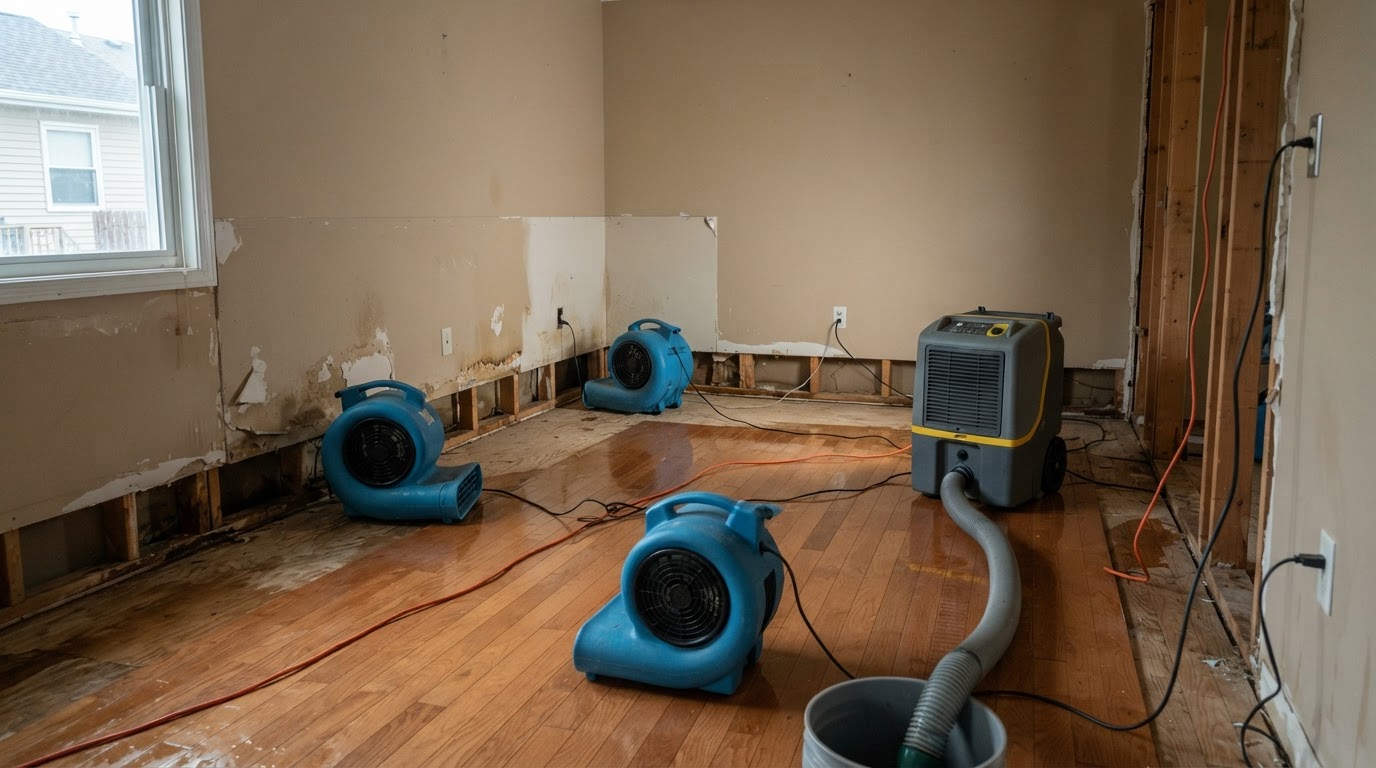
Drying works through evaporation. Air movers increase air movement across wet surfaces so moisture turns into vapor, and dehumidifiers pull that vapor out of the air. As the air stays dry, more moisture leaves the materials, gradually bringing them back toward an appropriate dry condition.
Signs Moisture May Remain
- Damp or cool surfaces
- Swelling or softening
- Warping or cupping
- Musty odors
- Discoloration or staining
- Elevated indoor humidity
- Persistent dampness
Our Structural Drying Process Near Wake Forest
The structural drying process includes moisture assessment, establishing a drying strategy, air movement, dehumidification, monitoring, adjusting equipment or setup where appropriate, evaluating drying progress, and determining next restoration steps. The setup is adjusted as materials dry.
- 1
Moisture Assessment
Moisture meters are used to measure how wet affected materials are and to map the full extent of moisture migration.
- 2
Establish Drying Strategy
A drying strategy is set based on the materials affected, the amount of moisture, and the layout of the affected area.
- 3
Air Movement
Air movers are placed to promote evaporation from wet surfaces, turning moisture into vapor that enters the air.
- 4
Dehumidification
Dehumidifiers pull moisture out of the air, keeping humidity low so materials continue to release moisture.
- 5
Monitoring & Adjustment
Moisture readings are taken over time, and equipment placement is adjusted where appropriate to improve drying.
- 6
Evaluate & Plan Next Steps
Once materials reach an appropriate dry condition, the drying equipment is evaluated and any remaining restoration needs are identified.
Air movers, dehumidifiers, and water extraction equipment each serve a different purpose. Extraction equipment removes liquid water, air movers promote evaporation from wet materials, and dehumidifiers remove the resulting vapor from the air. No specific equipment brands are named, because the right setup depends on the loss.
Why Dehumidification Matters After Water Damage
Dehumidification matters because water evaporating from wet materials enters the indoor air as humidity. Without humidity management, that moisture can reabsorb into porous materials and slow the drying process. Managing humidity is what makes structural drying controlled rather than left to chance.
In simple terms, wet materials and the air around them reach toward a moisture equilibrium. If the air is humid, materials stay wet longer. If the air is kept dry with dehumidifiers, moisture keeps moving out of the materials and into the air, where it is removed. This is why a closed drying environment is often used — it lets the dehumidifier control the air moisture rather than fighting an open room.
Porous materials and hidden cavities complicate drying. Moisture inside a wall cavity or beneath a subfloor is not exposed to direct airflow, so drying those areas may require targeted setup. Left unmanaged, elevated humidity can contribute to secondary damage. This is why no exact drying duration is promised — the right amount of time depends on the materials, the amount of water, and site conditions.
Need Professional Drying?
Controlled structural drying helps manage moisture that extraction cannot reach.
Professional Water Damage Drying for Wake Forest Properties
Structural drying is used after flooding, burst pipes, appliance leaks, roof leaks, storm water, bathroom overflows, water heater leaks, and commercial water losses. Any situation where water has absorbed into building materials can benefit from controlled drying in homes and businesses across Wake Forest.
Residential drying addresses the materials most often affected in homes — drywall, flooring, subfloors, and cabinetry. Commercial drying applies to offices, retail spaces, and business properties where larger affected areas may require additional equipment and coordination.
Along with Wake Forest, service information is available for nearby communities including Raleigh, Rolesville, Youngsville, and Knightdale. The footer lists the full service-area coverage across the Triangle region.
Related Water Damage Services
Structural Drying & Dehumidification FAQs in Wake Forest
Need Structural Drying in Wake Forest?
Call Wake Forest Water Damage Restoration at 984-401-9704 for structural drying and dehumidification in Wake Forest, NC. Controlled drying helps manage moisture retained in building materials after a water loss.
Wake Forest, NC 27587 • Serving Wake Forest & surrounding North Carolina communities