Roof Leak, Ceiling, Wall & Hidden Water Damage Cleanup in Wake Forest, NC
Wake Forest Water Damage Restoration provides roof leak, ceiling, wall, and hidden water damage cleanup in Wake Forest, North Carolina. Water that enters through a roof leak or travels behind walls can affect drywall, insulation, framing, and ceiling assemblies long before the full extent becomes visible. Moisture detection and structural drying help locate and manage that hidden moisture.
Signs of Ceiling, Wall & Hidden Water Damage in Wake Forest
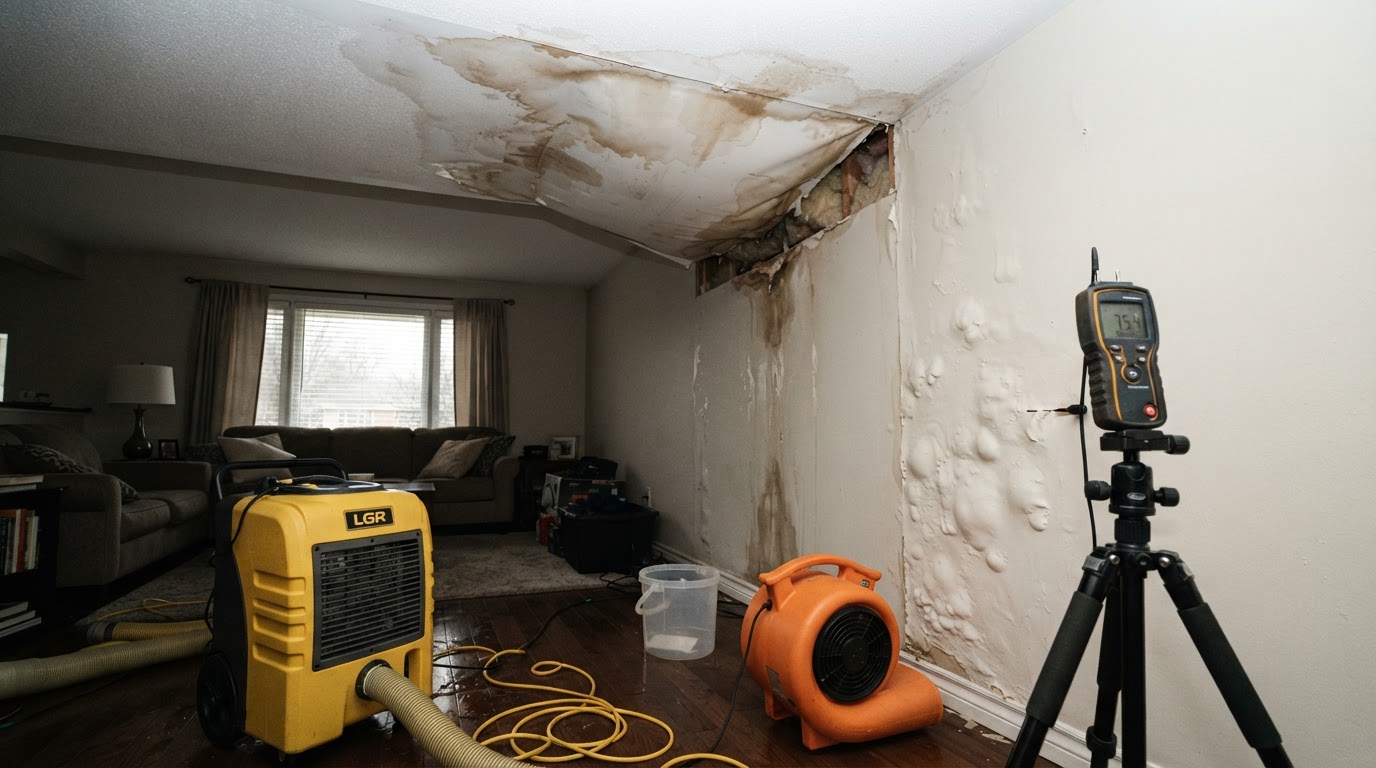
Signs of ceiling, wall, and hidden water damage include water stains, discoloration, bubbling paint, peeling finishes, soft drywall, swollen baseboards, warped materials, damp odors, ceiling staining, persistent dampness, and water appearing far from the apparent source. The visible stain may not identify the exact origin or full extent of water migration.
Hidden water damage often becomes visible only after moisture has been present for some time. A ceiling stain, a patch of bubbling paint, or a swollen section of baseboard can be the first sign that water has entered a wall or ceiling assembly. By the time these signs appear, water may have traveled well beyond the visible area.
Possible sources include a roof leak, plumbing inside a wall, an upstairs bathroom, an HVAC condensate issue, an appliance leak, storm intrusion, or a supply-line leak. Because water travels vertically and horizontally through wall cavities and along framing, the visible stain is often far from where the water actually entered the building.
The visible stain may not identify the exact origin or the full extent of water migration, which is why moisture detection is used to evaluate materials behind the surface before a drying plan is developed.
Our Hidden Moisture & Water Damage Cleanup Process Near Wake Forest
The hidden water damage cleanup process includes assessing visible damage, determining the likely source, confirming the active leak has been addressed by the appropriate trade if necessary, evaluating moisture spread, removing standing water where present, drying affected materials, dehumidifying, and determining what materials may require removal or restoration.
- 1
Assess Visible Damage
Visible signs such as stains, bubbling paint, and soft drywall are assessed to understand where moisture may be present.
- 2
Determine the Likely Source
The likely source of the water is identified so the active leak can be addressed. Roof or plumbing repair is handled by the appropriate trade.
- 3
Confirm the Active Leak Is Addressed
Where an active leak remains, it is confirmed to be addressed or isolated by the appropriate trade before drying proceeds.
- 4
Evaluate Moisture Spread
Moisture detection maps how far water has traveled into drywall, wall cavities, insulation, framing, and ceiling assemblies.
- 5
Dry & Dehumidify
Air movement and dehumidification promote controlled drying of affected materials, with monitoring over time.
- 6
Determine Restoration Needs
Materials that may require removal or restoration are identified. Invasive demolition is not always required and is based on the moisture evaluation.
Moisture detection methods are used to evaluate materials behind the surface without assuming that demolition is always required. The decision to remove materials is based on the moisture evaluation and the condition of the affected materials.
Why Wet Drywall, Ceilings & Wall Cavities Need Careful Drying
Wet drywall, ceilings, and wall cavities need careful drying because drywall can absorb water, insulation may retain moisture, wood framing may remain damp, water can travel vertically and horizontally, ceiling assemblies may conceal affected materials, and paint can mask surface moisture. Structural drying addresses moisture that is not visible.
Drywall wicks water upward and holds it within the gypsum core, so a drywall surface that feels dry may still be wet inside. Insulation inside wall cavities can retain moisture depending on its type and condition, and wood framing can stay damp even after the surrounding air is dry. Water can travel vertically and horizontally through these assemblies, so the visible stain rarely shows the full affected area.
Ceiling assemblies can conceal affected materials above the drywall, and paint can mask surface moisture by holding it against the wall. Structural drying uses air movement and dehumidification to manage moisture inside these assemblies, with moisture readings taken over time to confirm that materials are reaching an appropriate dry condition.
Avoid Standing Beneath a Sagging or Saturated Ceiling
If a ceiling is sagging, bulging, heavily saturated, or appears unstable, avoid standing beneath it. Move to a safe area and call a professional. Do not attempt DIY ceiling puncturing, because trapped water and saturated materials can be unsafe.
Hidden Water Damage?
Moisture detection helps locate water that has traveled behind walls and above ceilings.
Water Damage Cleanup After Roof & Ceiling Leaks in Wake Forest
Wake Forest Water Damage Restoration addresses interior water damage, extraction, moisture assessment, drying, and cleanup after roof and ceiling leaks. Actual roof repair may require a qualified roofing contractor, and the two services are coordinated as appropriate.
The restoration service focuses on the interior side of a roof or ceiling leak — removing standing water, evaluating how far moisture has traveled into drywall and wall cavities, and drying affected materials. Wet drywall cleanup, wall water damage, attic water damage, and insulation drying are all addressed through the same moisture detection and structural drying process.
Along with Wake Forest, service information is available for nearby communities including Raleigh, Rolesville, Youngsville, and Knightdale. The footer lists the full service-area coverage across the Triangle region.
Related Water Damage Services
Roof Leak & Hidden Water Damage FAQs in Wake Forest
Hidden Water Damage in Wake Forest?
Call Wake Forest Water Damage Restoration at 984-401-9704 for roof leak, ceiling, wall, and hidden water damage cleanup in Wake Forest, NC. Moisture detection and structural drying help manage water that has traveled behind walls and above ceilings.
Wake Forest, NC 27587 • Serving Wake Forest & surrounding North Carolina communities