Washing Machine Overflow & Laundry Room Water Damage Cleanup in Wake Forest, NC
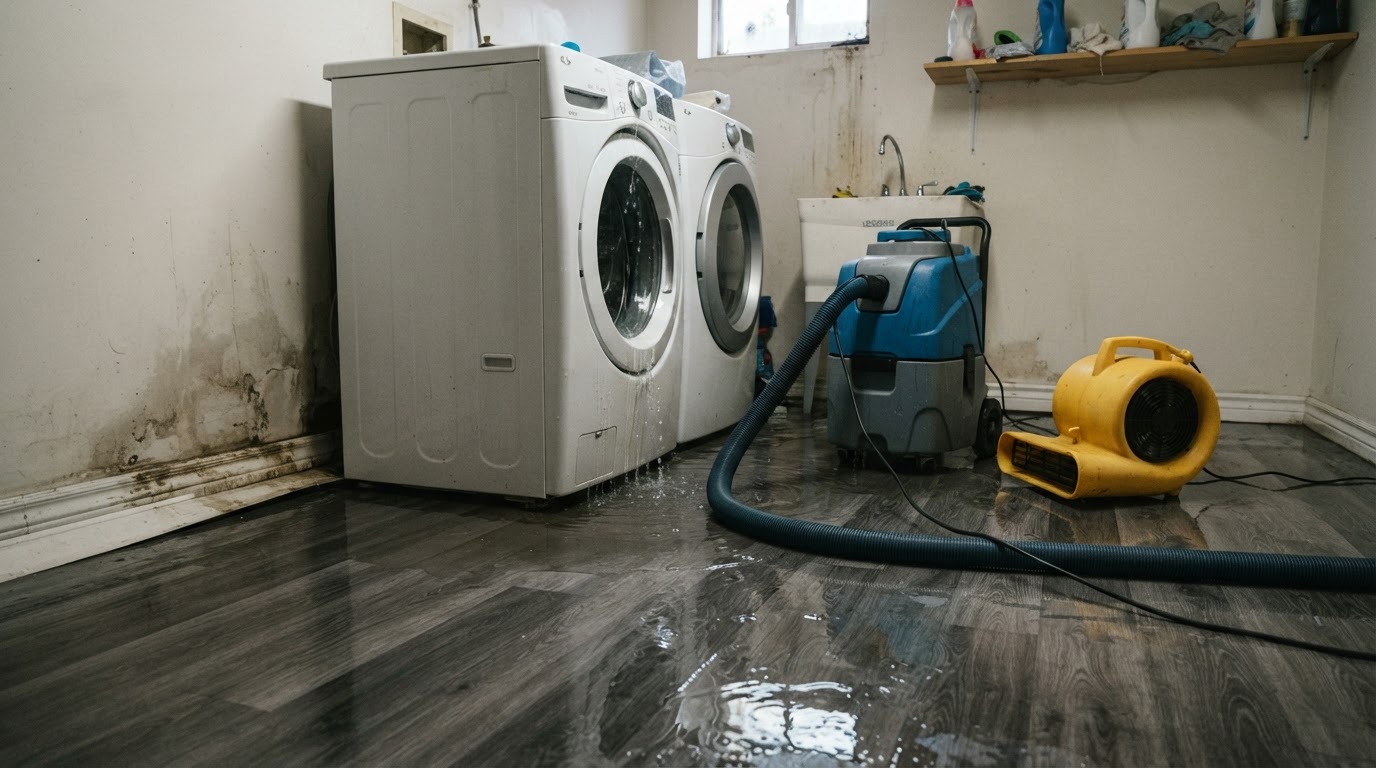
Wake Forest Water Damage Restoration provides washing machine overflow and laundry room water damage cleanup in Wake Forest, North Carolina. Burst supply hoses, loose connections, drain issues, and overflow events can release water that spreads quickly from the laundry room into hallways, closets, and adjacent rooms.
What Causes Washing Machine Water Damage in Wake Forest?
Washing machine water damage is commonly caused by supply hose failures, loose connections, drain issues, overflow events, internal appliance leaks, improper drainage, and nearby utility plumbing leaks. Water can spread quickly from the laundry room into hallways, closets, and adjacent rooms before it is noticed.
A burst supply hose is one of the most common laundry room water losses. The hose connects the home's water supply to the washer, and when it fails it can release a large volume of water quickly. Loose connections at the hose or the machine can leak steadily, and drain issues or improper drainage can cause water to back up and overflow the stand pipe or drain pan.
Internal appliance leaks and overflow events can also push water onto the floor. The restoration service does not diagnose or repair the appliance itself — that is handled by an appliance professional. The focus is on the resulting water damage.
Warning Signs of Laundry Room Water Loss
- Puddles around the washer
- Damp or warped flooring
- Swollen baseboards
- Water staining on walls
- Soft or discolored drywall
- Water appearing downstairs
- Musty odors near the laundry area
- Persistent dampness
When the laundry room is on a second floor, water appearing downstairs — on a ceiling or in a room below — is a strong sign that the leak has already traveled through the floor assembly.
Our Washing Machine Water Cleanup Process Near Wake Forest
The laundry room water cleanup process includes addressing the water source safely, extracting standing water, assessing moisture spread, inspecting flooring and adjacent areas, evaluating walls and baseboards, structural drying, dehumidification, and restoration planning. Both visible and hidden moisture are addressed.
- 1
Address the Water Source Safely
Where it can be done safely, the water source is shut off. The washing machine repair or hose replacement is handled by an appliance professional.
- 2
Extract Standing Water
Standing water in the laundry room and any adjacent areas is removed using appropriate extraction equipment.
- 3
Assess Moisture Spread
Moisture detection maps how far water has traveled into hallways, closets, adjacent rooms, and beneath flooring.
- 4
Inspect Flooring & Adjacent Areas
Flooring, subfloors, transitions, and adjacent rooms are evaluated for moisture content to determine the full scope.
- 5
Structural Drying & Dehumidification
Air movement and dehumidification promote controlled drying of materials that absorbed water, with monitoring over time.
- 6
Restoration Planning
Materials or areas requiring additional repair or restoration are identified for the next phase once drying goals are met.
Because laundry room water often travels beyond the room where it started, the cleanup process looks beyond the visible puddle. Moisture detection helps locate water that has migrated into hidden areas.
Why Laundry Room Water Can Spread Beneath Flooring
Laundry room water can spread beneath flooring because it travels through floor seams, transitions, baseboards, wall penetrations, subfloors, and ceiling assemblies below. The type of flooring affects how water moves and how it is dried, but no flooring type is guaranteed to be saved or lost.
Tile, vinyl, laminate, wood, and carpet each respond to water differently. Water can slip beneath tile through grout lines and cracks, travel under vinyl and laminate through seams and transitions, and soak into wood and carpet along with the padding below. In adjacent rooms, carpet can wick water from the laundry room across the floor.
When the laundry room is upstairs, water can pass through the floor assembly into the ceiling below, down wall cavities, and into rooms on the lower level. The visible damage in the laundry room may not show how far moisture has traveled, which is why moisture detection is used to map the full affected area before drying begins.
Laundry Room Overflow?
Fast extraction helps limit how far washer water spreads beneath flooring and into adjacent rooms.
Laundry Room Water Damage Help for Wake Forest Properties
Laundry room water damage cleanup is available for single-family homes, townhomes, apartments, rental properties, and second-floor laundry rooms in Wake Forest. The cleanup approach is tailored to where the laundry room is located and how far the water has spread.
Second-floor laundry rooms are especially prone to causing damage on the floor below, because water travels through the floor assembly into ceilings and wall cavities. Apartments and rental properties may require coordination with tenants or property managers to contain the affected area.
Supply-line breaks and appliance leaks are common contributors to laundry room water damage. Where a supply-line break is involved, the same extraction and drying principles apply. Along with Wake Forest, service information is available for nearby communities including Raleigh, Rolesville, Youngsville, and Knightdale.
Related Water Damage Services
Washing Machine Overflow FAQs for Wake Forest, NC
Laundry Room Water Damage in Wake Forest?
Call Wake Forest Water Damage Restoration at 984-401-9704 for washing machine overflow and laundry room water damage cleanup in Wake Forest, NC. Water extraction and structural drying help manage moisture that has spread beyond the laundry room.
Wake Forest, NC 27587 • Serving Wake Forest & surrounding North Carolina communities