AC/HVAC Condensate Drain Line & Appliance Leak Cleanup in Wake Forest, NC
Wake Forest Water Damage Restoration provides AC and HVAC condensate drain line overflow and appliance leak water damage cleanup in Wake Forest, North Carolina. Condensate drain issues, drain pan overflows, and water-connected appliance leaks can release water that affects flooring, drywall, and hidden materials before it is noticed.
How HVAC & Appliance Leaks Cause Water Damage in Wake Forest
HVAC and appliance leaks cause water damage through condensate drain issues, drain pan overflows, condensate line blockage or failure, water collecting around HVAC equipment, and leaks from water-connected appliances such as dishwashers, refrigerators, ice maker lines, and washing machines. Slow leaks can affect hidden materials over time.
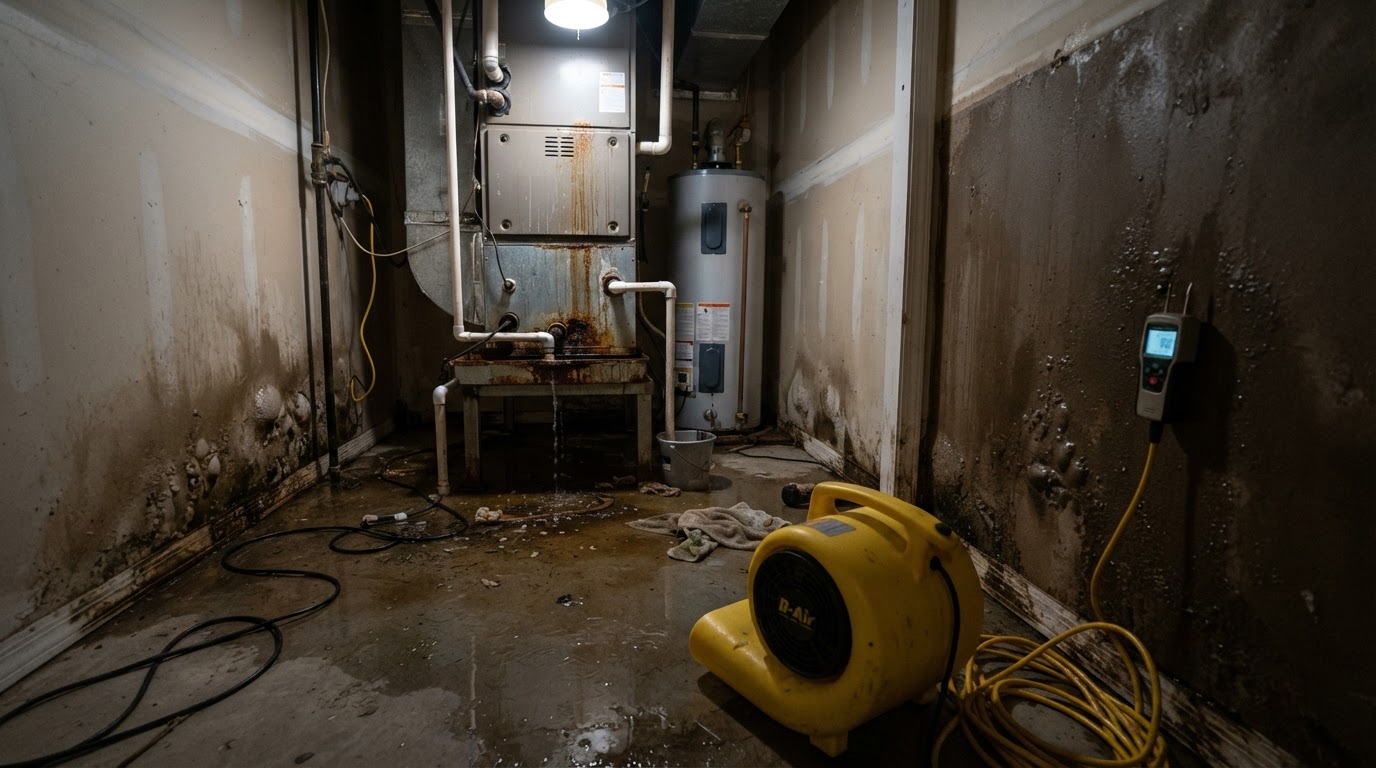
HVAC systems remove humidity from the air and produce condensate that drains away through a condensate line. When that line becomes blocked or fails, water backs up and overflows the drain pan, often in a utility closet, attic, or near the air handler. The leak can be slow and persistent, allowing water to collect around the equipment and seep into flooring, drywall, and ceilings below.
Water-connected household appliances are another common source. Dishwashers, refrigerators and ice maker lines, and washing machines all rely on supply lines that can leak or fail. Because these appliances often sit against a wall or beneath a counter, the leak can run behind the unit and into the flooring and subfloor before it is discovered.
HVAC or appliance repair itself may require an appropriate qualified technician. This service addresses the resulting water damage — extracting water, evaluating moisture migration, and drying affected materials.
Signs of HVAC & Appliance Water Damage
- Damp flooring near HVAC equipment
- Water stains on drywall
- Wet drywall in utility closets
- Moisture near mechanical closets
- Swollen baseboards
- Water beneath appliances
- Ceiling staining below HVAC units
- Persistent dampness or odors
Our HVAC & Appliance Leak Cleanup Process in Wake Forest
The HVAC and appliance leak cleanup process includes identifying affected areas, confirming the source has been addressed or isolated appropriately, water extraction, moisture detection, inspecting adjacent materials, structural drying, dehumidification, and restoration planning. Small leaks can affect hidden materials when they persist.
- 1
Identify Affected Areas
The rooms and materials affected by the condensate or appliance leak are identified, including areas beyond the visible water.
- 2
Confirm the Source Is Addressed
The source is confirmed to be addressed or isolated appropriately. HVAC or appliance repair is handled by a qualified technician.
- 3
Water Extraction
Standing water is removed using appropriate extraction equipment, including water that has collected around HVAC equipment or beneath appliances.
- 4
Moisture Detection
Moisture meters evaluate how far water has traveled into drywall, flooring, subfloors, and adjacent materials.
- 5
Structural Drying & Dehumidification
Air movement and dehumidification promote controlled drying of affected materials, with monitoring over time.
- 6
Restoration Planning
Materials or areas requiring additional repair or restoration are identified for the next phase once drying goals are met.
A small condensate leak or appliance drip can affect hidden materials when it persists over days or weeks. Even after the visible water is gone, moisture can remain in drywall, baseboards, and subfloors, which is why drying continues until moisture readings confirm materials have reached an appropriate dry condition.
Can a Slow AC or Appliance Leak Cause Hidden Water Damage?
Yes. A slow or repeated AC or appliance leak can affect baseboards, drywall, cabinetry, flooring, subfloor, wall cavities, ceilings, and closets before the full extent becomes visible. Persistent moisture can create conditions that support microbial growth, so moisture detection and drying are used even when the leak seems small.
Because slow leaks often run behind appliances or inside mechanical closets, the water has time to absorb into surrounding materials. Signs such as staining, swelling, persistent dampness, odor, and peeling finishes can indicate that moisture has been present for some time.
Persistent moisture can create conditions that support microbial growth, so the goal is not only to remove the visible water but to dry the affected materials thoroughly. Moisture detection locates water that has migrated into hidden areas, and structural drying manages that retained moisture.
HVAC or Appliance Leak?
Even a slow leak can affect hidden materials — fast drying helps limit secondary damage.
Appliance & HVAC Water Damage Help Near Wake Forest
HVAC condensate and appliance leak water damage cleanup is available for homes and businesses in Wake Forest. The cleanup approach is tailored to the source of the leak and how far moisture has migrated into surrounding materials.
Common situations include AC drain line overflows, refrigerator and ice-maker line leaks, dishwasher leaks, and washing machine supply hose failures. Each can release water into flooring, drywall, and subfloors, and each is addressed with the same extraction and drying principles.
Along with Wake Forest, service information is available for nearby communities including Raleigh, Rolesville, Youngsville, and Knightdale. The footer lists the full service-area coverage across the Triangle region.
Related Water Damage Services
HVAC & Appliance Leak Cleanup FAQs for Wake Forest
HVAC or Appliance Leak in Wake Forest?
Call Wake Forest Water Damage Restoration at 984-401-9704 for AC/HVAC condensate and appliance leak water damage cleanup in Wake Forest, NC. Water extraction and structural drying help manage moisture from slow and persistent leaks.
Wake Forest, NC 27587 • Serving Wake Forest & surrounding North Carolina communities