Crawl Space Water Damage & Moisture Cleanup in Wake Forest, NC
Wake Forest Water Damage Restoration provides crawl space water damage and moisture cleanup in Wake Forest, North Carolina. Water in a crawl space can come from plumbing leaks, groundwater intrusion, storm or rainfall-related entry, drainage issues, or HVAC condensation. Extraction, moisture evaluation, and structural drying help manage that water and the moisture it leaves behind in framing and insulation.
What Causes Water in Crawl Spaces Near Wake Forest?
Water in a crawl space can come from plumbing leaks, groundwater intrusion, storm or rainfall-related entry, drainage-related intrusion, HVAC condensation, or water migrating from another building area. The apparent source is identified before cleanup begins, since the source influences the cleanup approach.
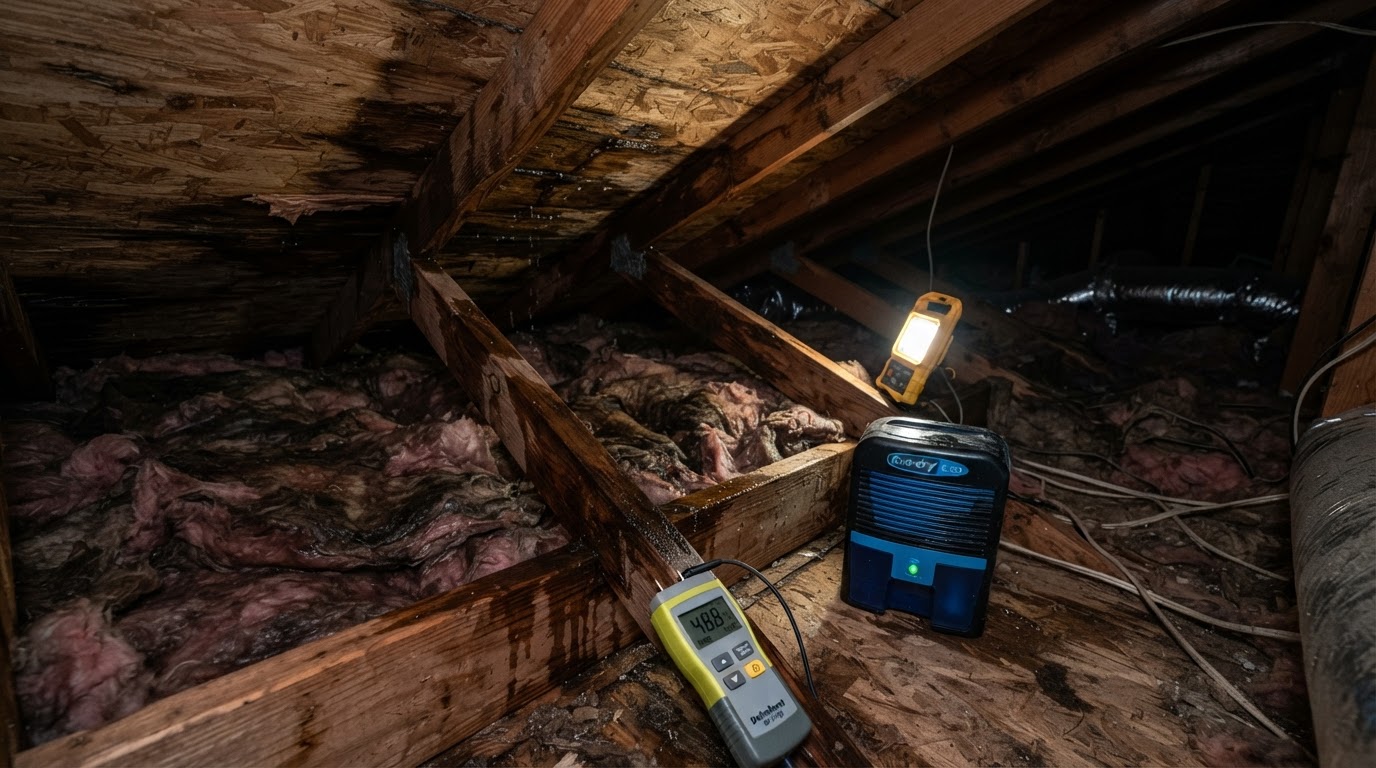
Crawl spaces are below the main living area, so water that enters can sit against the soil, foundation walls, and floor framing for an extended period. Even when no standing water is visible inside the home, the crawl space can hold moisture that affects the subfloor and framing above it.
The restoration service does not diagnose foundation or drainage systems. Drainage, foundation, or groundwater management repairs are handled by an appropriate qualified professional. The focus here is the resulting water and moisture.
Warning Signs of Crawl Space Water
- Standing water
- Wet soil or surfaces
- Damp framing
- Wet insulation
- Persistent humidity
- Water staining
- Damp odors
- Moisture on building materials
Our Crawl Space Water Cleanup Process in Wake Forest
The crawl space water cleanup process includes assessing safe access, determining the apparent source, extracting standing water where appropriate, evaluating framing and insulation, assessing moisture conditions, structural drying, dehumidification where appropriate, cleaning depending on water source, and restoration planning.
Crawl Space Safety
- 1
Assess Safe Access
The crawl space is assessed for safe access, including standing water depth, electrical hazards, and structural conditions.
- 2
Determine the Apparent Source
The apparent water source is identified so the cleanup approach can be adjusted based on whether the water appears to be from plumbing, groundwater, or another source.
- 3
Extract Standing Water
Standing water is removed using appropriate extraction equipment once safe access is confirmed.
- 4
Evaluate Framing & Insulation
Floor framing, joists, insulation, and the subfloor are checked for moisture, since crawl space moisture can migrate upward.
- 5
Structural Drying & Dehumidification
Air movement and dehumidification promote controlled drying of framing and other materials, with monitoring over time.
- 6
Restoration Planning
Materials or areas requiring additional repair or restoration, including insulation replacement, are identified once drying goals are met.
Why Crawl Space Moisture Can Affect Building Materials
Crawl space moisture can affect floor framing, joists, the subfloor, insulation, wood components, and utility penetrations. Persistent moisture can affect these materials even when water is not visible inside the living space, because the crawl space sits directly below the floor assembly.
Wood framing and the subfloor can absorb moisture from a damp crawl space over time. Wet insulation between joists can hold that moisture against the subfloor above it. This is why moisture detection is used to evaluate the floor assembly, not just the crawl space itself.
Persistent moisture can create conditions that support microbial growth, so drying is continued until moisture readings confirm materials have reached an appropriate dry condition. Not every crawl-space issue causes indoor damage, but the floor assembly is evaluated as part of the cleanup.
Water in Your Crawl Space?
Crawl space moisture can affect the framing and subfloor above it.
Crawl Space Water Damage Help for Wake Forest Properties
Crawl space water cleanup is available for homes in Wake Forest. A crawl space water loss is often connected to flooding, storm intrusion, or a sump pump problem, so this specialized cleanup connects to those broader processes.
Along with Wake Forest, service information is available for nearby communities including Raleigh, Rolesville, Youngsville, and Knightdale.
Related Water Damage Services
Crawl Space Water Damage FAQs in Wake Forest
Crawl Space Water in Wake Forest?
Call Wake Forest Water Damage Restoration at 984-401-9704 for crawl space water damage and moisture cleanup in Wake Forest, NC. Extraction and structural drying help manage water that has affected framing and insulation.
Wake Forest, NC 27587 • Serving Wake Forest & surrounding North Carolina communities